WEDDING STYLE
Boho Wedding: Free-Spirited Style for Modern Vietnamese Couples
How to pull off bohemian elegance in Vietnam — without it looking like a costume party.
Boho has been one of the most requested — and most misunderstood — wedding styles for the past five years. Done well, a bohemian wedding feels effortlessly beautiful: natural textures, organic shapes, warm earth tones, and a relaxed atmosphere that lets everyone breathe. Done poorly, it looks like a craft fair. The difference comes down to understanding what “boho” actually means as a design philosophy, not just copying Pinterest boards.
THE PHILOSOPHY
What Boho Actually Means in Wedding Design
At its core, bohemian design is about rejecting formality in favor of authenticity. In wedding context, this translates to: natural over manufactured, imperfect over polished, personal over conventional. It doesn’t mean messy, cheap, or unplanned — in fact, achieving a “relaxed” look often requires more design skill than a traditional setup.
The boho palette leans into earth tones: terracotta, sage green, dusty rose, warm cream, amber, and burnt sienna. Metallic accents come in brass and copper rather than silver and chrome. Textures matter more than patterns: raw wood, linen, macramé, dried grasses, woven rattan, and unglazed ceramics create the layered, tactile quality that defines the style.

The hallmark of good boho design: it looks effortless, but every element was carefully chosen.
In Vietnam, boho style works particularly well because the country’s tropical vegetation provides a natural backdrop that enhances rather than fights the aesthetic. Where European couples might need to import greenery, Vietnamese couples are surrounded by it. The challenge is restraint — knowing when to add and when the natural environment is already doing the work.
THE FLOWERS For broader inspiration, see Brides.com wedding inspiration.
Wild, Organic, and Intentionally Imperfect
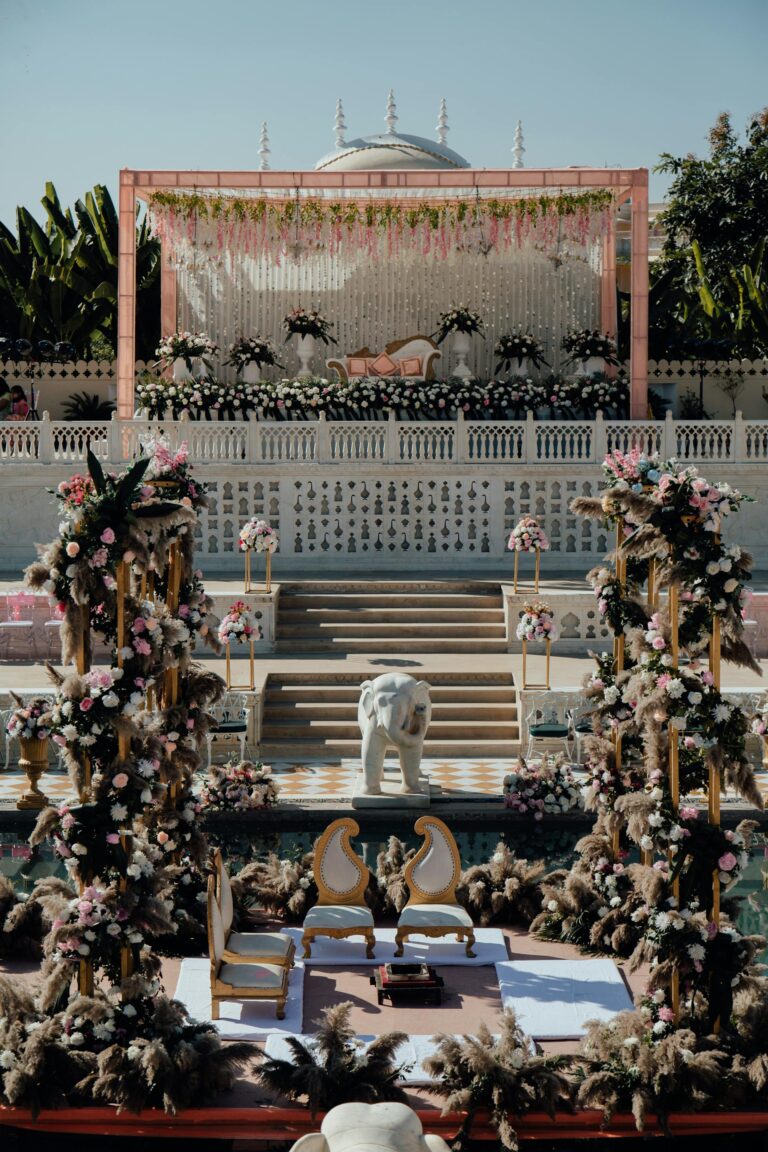
Boho florals are the opposite of traditional wedding arrangements. Instead of tight, symmetrical bouquets, the goal is movement: trailing vines, wildflower-inspired combinations, and arrangements that look gathered rather than constructed. Pampas grass, dried elements, proteas, and unstructured greenery are hallmarks.

A boho bouquet should look like it was just gathered from a beautiful meadow — organic shape, mixed textures, trailing elements.
For Vietnamese couples, local alternatives to imported boho staples work beautifully: tropical ferns replace Italian ruscus, local jasmine substitutes for imported waxflower, and Vietnam’s abundant greenery provides the cascading foliage that defines boho arrangements. The cost savings are significant — a boho arrangement using local materials can cost 40-60% less than one relying on imported stems.
One important design note: dried flowers and pampas grass need careful handling in Vietnam’s humidity. Work with a florist experienced in tropical conditions — dried elements that look perfect in a California climate can wilt or discolor quickly in Saigon’s moisture. Mixing dried and fresh elements extends the visual life of the arrangement.
THE VENUE
Outdoor Spaces That Make or Break the Boho Look
Boho weddings belong outdoors — or at minimum, in spaces that blur the line between inside and out. The ideal venue has mature trees for canopy, natural ground cover (grass or gravel, not marble), and enough open space to create distinct zones that guests can wander between.
In HCMC and surrounding areas, several venue types work exceptionally well for boho: private villas in District 2 and Thảo Điền with garden space, farmstay properties in Củ Chi or Long An, beachside locations in Hồ Tràm or Vũng Tàu, and rooftop gardens that combine city views with greenery.
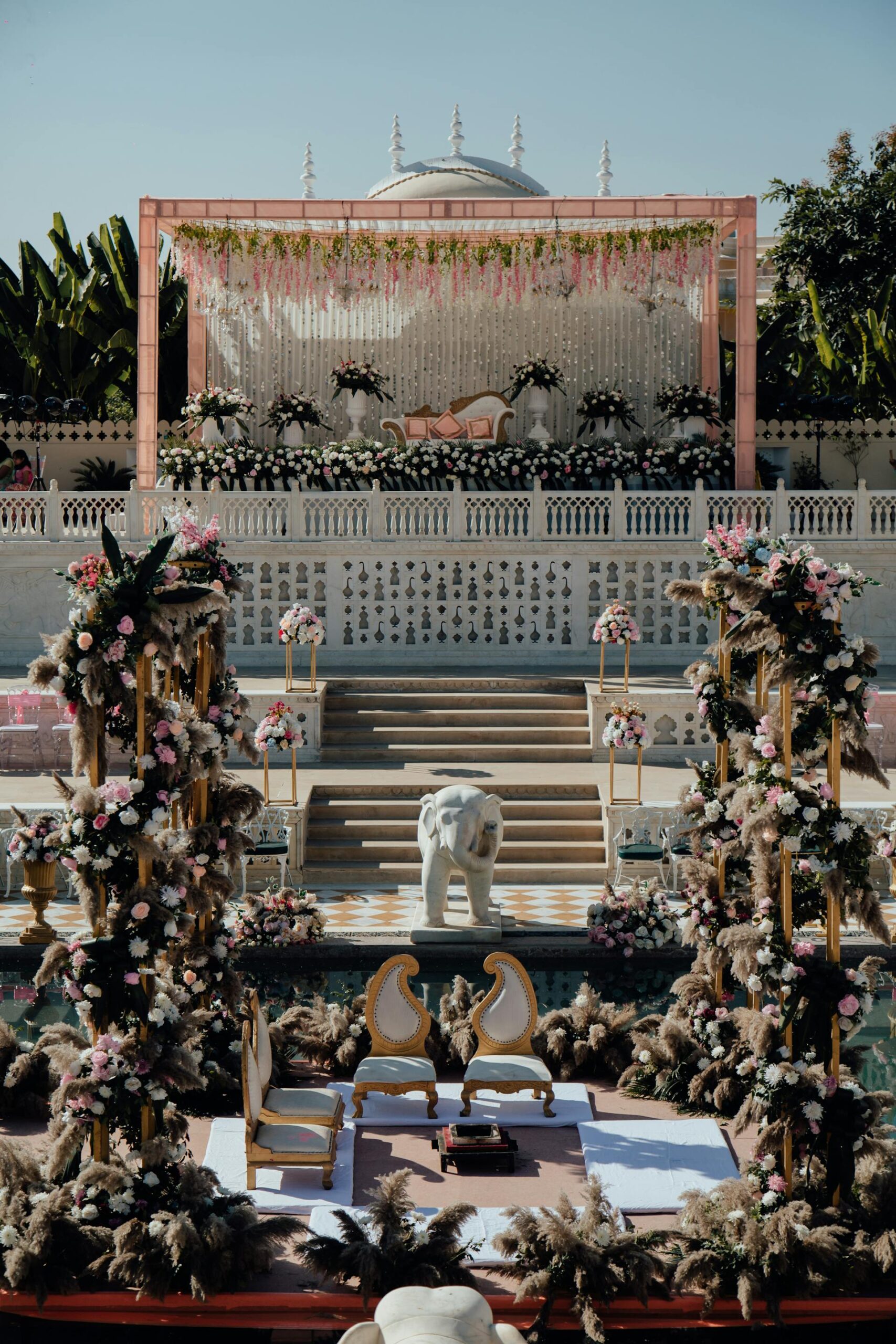
The best boho venues have character built in — mature trees, natural textures, and space for guests to move freely.
The weather conversation: outdoor boho weddings in Vietnam need a rain plan. The most elegant solution is a transparent or semi-transparent tent structure — it maintains the outdoor feeling while providing protection. Avoid fully enclosed backup venues that kill the aesthetic. Schedule your ceremony for late afternoon (4-5 PM) when Saigon’s heat has broken but daylight remains for photos.
THE DETAILS
Décor Elements That Define Bohemian Elegance
The details are where boho weddings either come together or fall apart. Here’s what works:
Ceremony backdrop: A triangular or hexagonal arch wrapped in asymmetrical greenery and dried flowers, grounded with clay pots or woven baskets. Skip the symmetrical flower wall — it contradicts the boho ethos. Seating: Mix and match is welcome. Wooden benches, rattan chairs, and floor cushions can coexist. The key is that everything shares a warm, natural material palette.
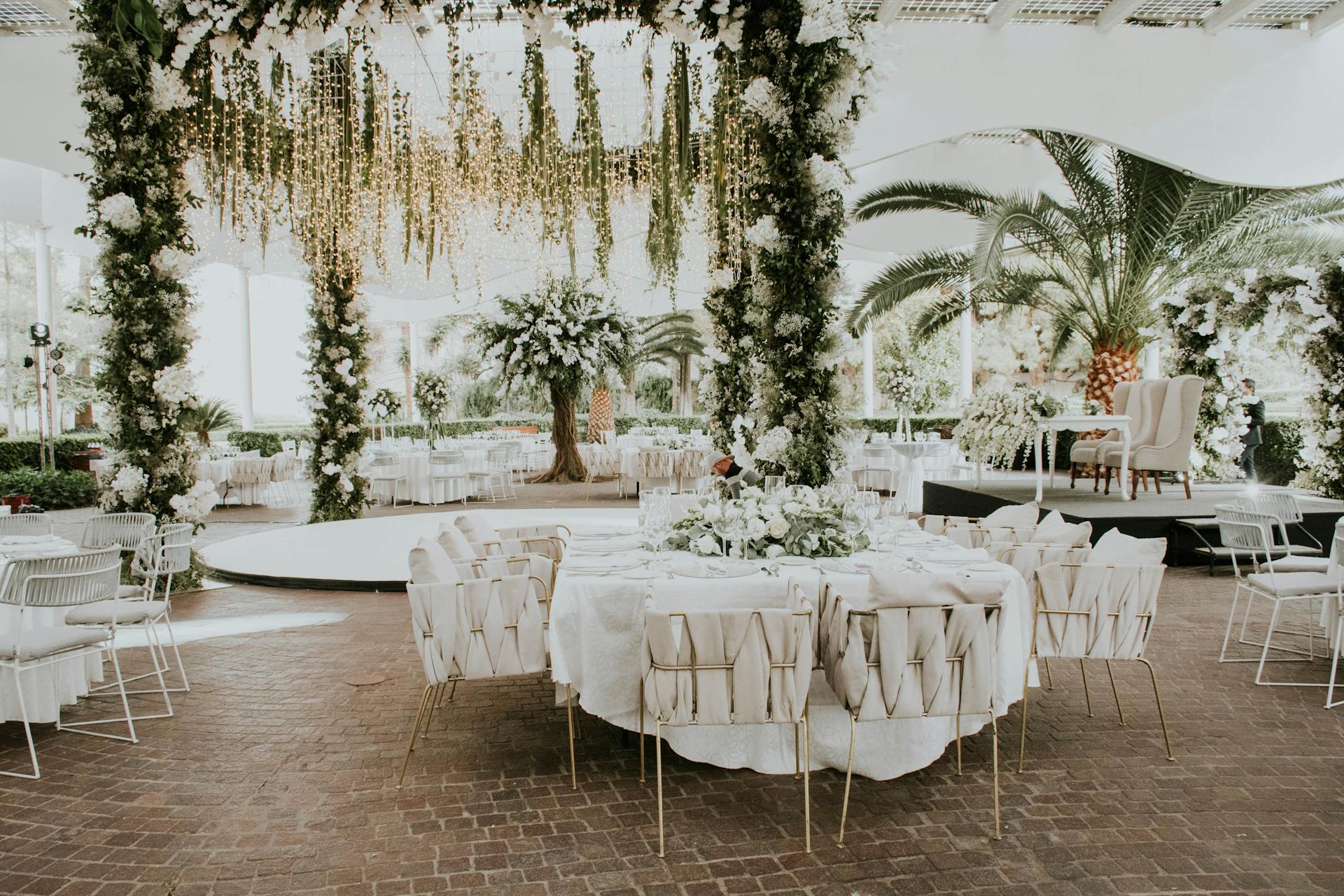
Mixed textures — linen, wood, clay, brass — create the layered warmth that makes boho tables feel inviting.
Table design: Long communal tables work better than rounds for boho. Use linen runners instead of full tablecloths, exposing raw wood underneath. Cluster candles at varying heights. Place settings should feel artisanal — handmade ceramics, cloth napkins tied with dried flower sprigs, handwritten name cards on textured paper.
Lighting: String lights (warm white, never cool white), lanterns, and abundant candles. The lighting should feel like golden hour extended into the evening. Avoid colored uplighting or disco effects — they break the organic spell instantly.
THE WARDROBE
What to Wear to Your Own Boho Wedding
The boho bride typically chooses flowing fabrics over structured silhouettes: A-line gowns with lace details, off-shoulder styles, or two-piece combinations with a soft crop top and flowing skirt. The veil, if worn, is long and simple — or replaced entirely with a flower crown or loose greenery hairpiece. Shoes are often flat sandals or even barefoot on grass.
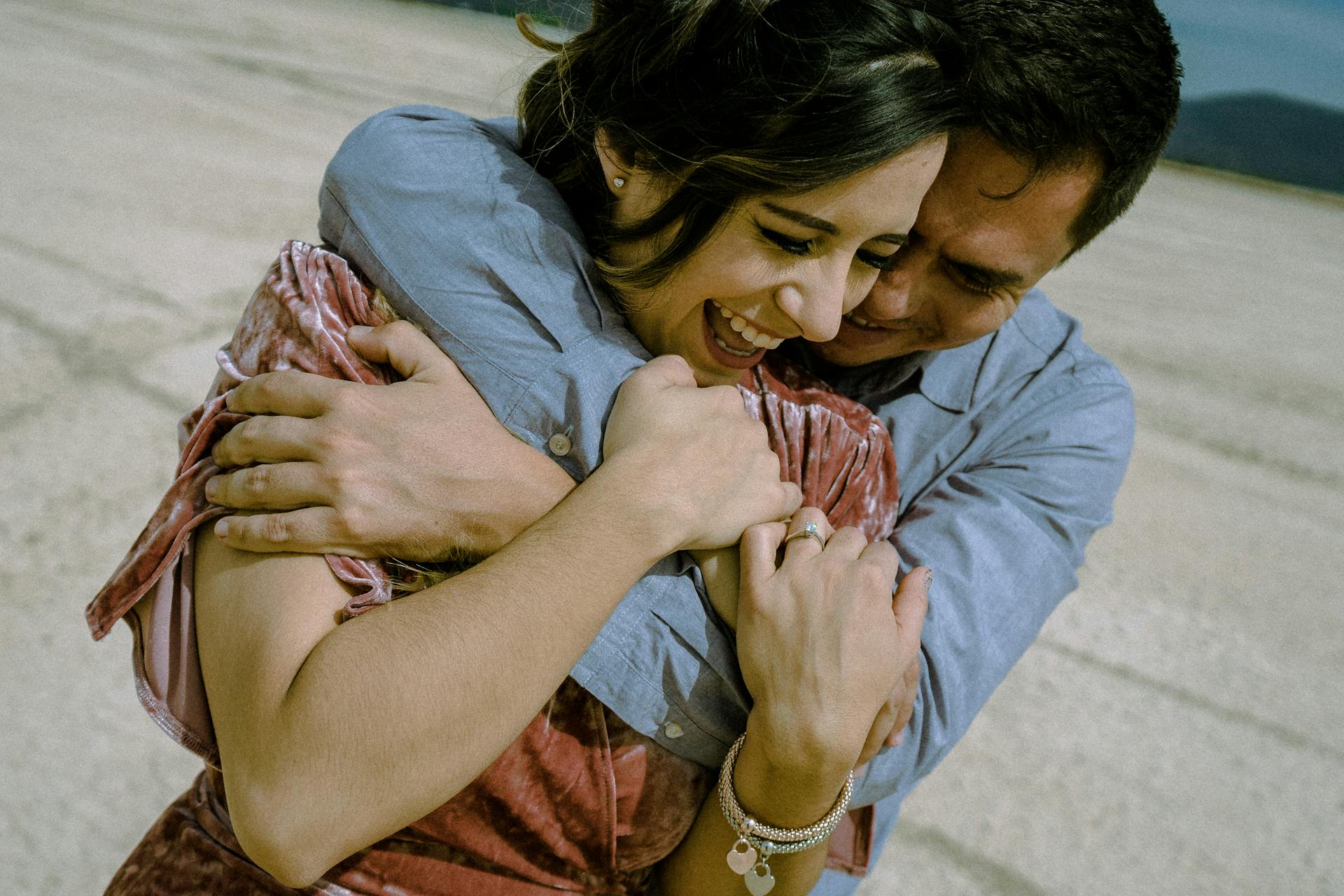
Boho bridal style prioritizes comfort and movement — the dress should flow with you, not restrict you.
For Vietnamese couples who want to incorporate traditional elements: a boho-inspired áo dài exists in the space between traditional and contemporary — think softer fabrics, earth-tone colors, floral embroidery in muted palettes, and a more relaxed fit. The tea ceremony can maintain its cultural significance while adopting a boho-adjacent aesthetic.
The groom’s wardrobe is equally important in boho: linen suits in tan, sage, or cream (never black), rolled sleeves, leather accessories, and minimal jewelry create a look that matches the bride’s relaxed elegance. Skip the boutonniere pin — a tucked sprig of dried lavender or rosemary in the breast pocket feels more natural.
EXPLORE MORE
Micro Weddings in Vietnam · 2026 Wedding Trends · Garden Villa Wedding
RELATED ARTICLES
Find more inspiration for your wedding style
THE WHITE PLANNER
Your Story. Our Stage.
Planning a wedding in Vietnam is a journey of culture, creativity, and celebration. The White Planner brings clarity, beauty, and calm to every step — so all you need to do is show up and say yes.